Certified on Blockchain
Tracking presentation
Negative emission certificates
We use blockchain to be transparent
We have developed a model that uses blockchain to ensure maximum transparency and traceability in the monitoring of negative emissions. Through this tracking system, we will create a decentralized and virtual database that will record every step of the process, making every action, from the calcium carbonate quarry to the final certificate, visible and immutable.
Certification through NFT
To ensure maximum authenticity and customization, we will introduce non fungible tokens (NFT) certified by third parties via MRV (Monitoring Reporting & Verification). These NFTs represent negative emission certificates and are easily verifiable by anyone at all times. This gives a very high level of credibility to the actions of those who choose Limenet for carbon offsets. Within these certificates there will be all the information regarding the Limenet process.
The benefits of Limenet tracking
- Maximum transparency towards the customer: we will offer our customers direct access to data in real time, allowing them to verify all the information.
- High traceability and reporting: each transaction will be recorded in an immutable way, facilitating the reporting and audit of activities.
- Elimination of double counting: thanks to the nature of the blockchain and the technology developed by Limenet, the risk of duplicate negative emission counts will be avoided.
- Security and Authenticity: The use of high security standards and the use of third-party certified NFTs will ensure that our actions on the chain have true feedback in the real world.
- Scalability and efficiency: with the use of Polygon, we will guarantee an efficient management, above energy and environmental impact, even of large volumes of transactions.
Limenet represents the future of sustainability for companies of all sizes. Our goal is to help create a cleaner, more beautiful, more livable world.
How it works
All instruments in our facilities will be connected to the blockchain’s decentralized network. Every operation, from the simplest to the most complex, will be recorded and stored permanently on blockchain through the Polygon network, a second layer of Ethereum known for its scalability and energy efficiency.
Material preparation and identification
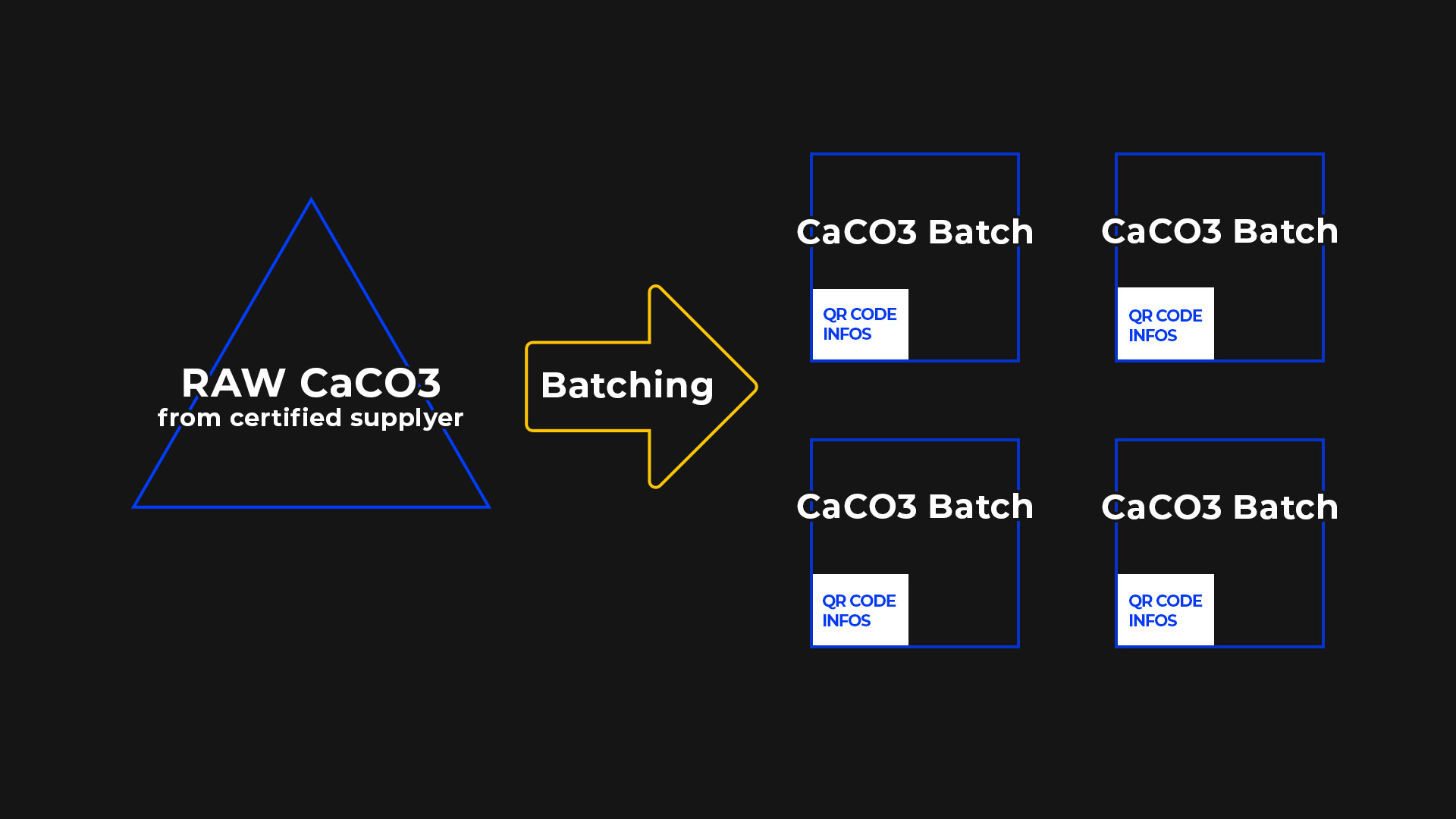
In our plant, calcium carbonate supplied by certified partners is subjected to a series of procedures to ensure maximum quality and traceability. Each production batch is labeled with a QR code containing key information such as origin, extraction date, associated CO₂ footprint and more. This preparatory step is crucial for the next steps.
See the flow here
Blockchain tracking
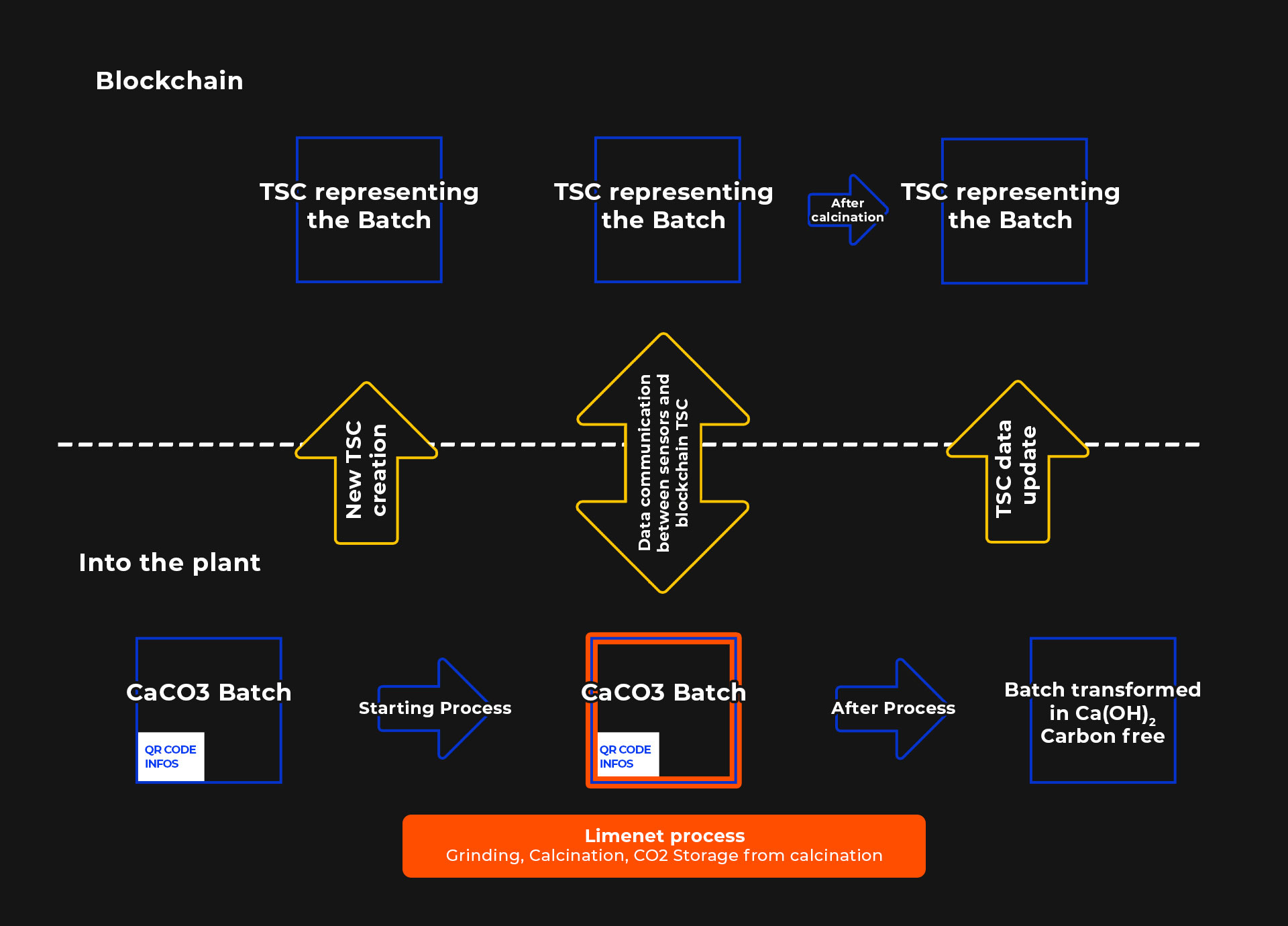
Once the calcium carbonate batch enters the calciner, a "Smart Contract Tracking" (TSC) associated with it is recognized and created. This smart contract digitally represents the batch on the blockchain, keeping all relevant information publicly and unchangeably. Throughout the production process, data is collected by sensors and sent to the TSC for permanent storage on the blockchain. This guarantees maximum transparency and traceability.
In detail, during the tracking phase, the Limenet server, which has the task of overseeing the plant’s machinery, retrieves both the material information through the QR code and those from sensors scattered throughout the plant. All collected data is validated and stored permanently on the blockchain via the TSC of the batch being processed.
See the flow here
CO₂ production and storage
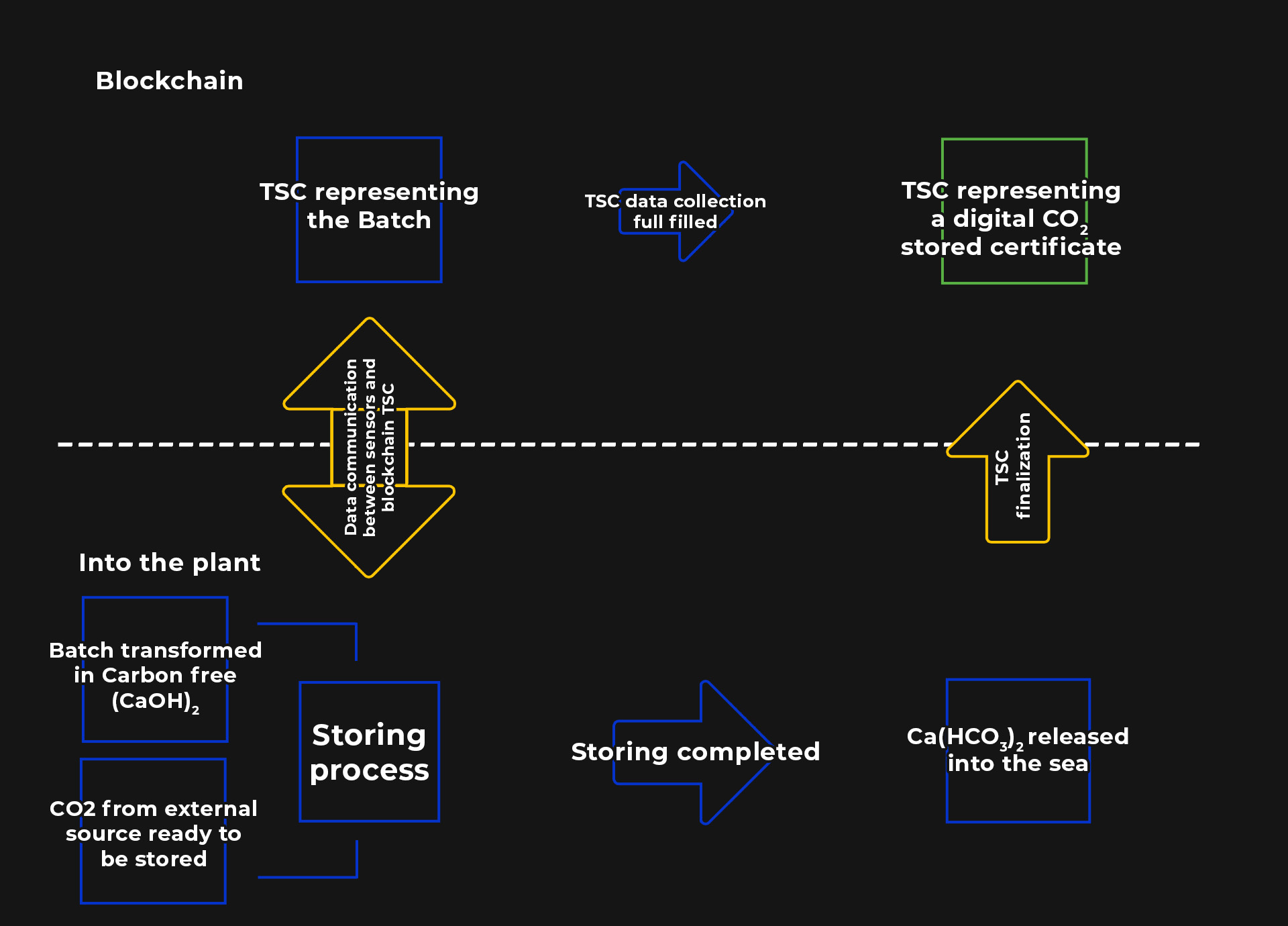
At the last stage, the TSC accumulated data from the sensors and recorded the chemical transformations of the material. Part of the calcium carbonate becomes calcium bicarbonate, which helps to compensate for the CO₂ emitted during production. The final phase of the TSC is the measurement of the actual CO₂, which reacts with slaked lime and produces calcium bicarbonate. This process is carefully monitored and each data is stored in the TSC on the blockchain.
See the flow here
Negative CO₂ emissions
Every day, thanks to the operation of industrial plants, we generate negative shares of CO₂, represented by our TSC, which contain accurate data on the origin of each gram of carbon dioxide stored. To meet the needs of our customers and ensure the uniqueness of the share of CO₂ purchased, we transform the TSC in fungible tokens (NFT). Each NFT represents an amount of negative CO₂ purchased and, in addition to the basic information of the TSC, contains other data such as a brief description of the reason for the purchase d, the name of the owner, external links on the monitoring and more.
Market of negative shares of CO₂
We generate daily quotas of CO₂ represented by our TSC, containing all the data of origin of every single gram of carbon dioxide that we store, but do not adequately represent our end customers who have heterogeneous needs.
For this reason, in addition to containing TSC information, our NFTs will offer an extra personal touch:
Personal Description: Each NFT will represent a unique ecological choice. You will be able to add a short description to share the story behind your share. Whether it’s a contribution to green projects or a personal commitment, you will be able to make your role in combating climate change tangible.
Personalized Identity: you will leave a trace of yourself in the world of sustainability. You will enter your name or nickname to identify yourself as an active supporter of the environmental cause. #climatedefender
Additional Connectivity: If you are part of an environmental organization or want to share more information, you will use the “More” space to insert links or references. An effective way to make your environmental commitment known even more.
Join us in embracing the challenge of sustainability through customization. Each NFT of CO₂ becomes a small chapter in a larger tale: our transition to a green and environmentally friendly future. Contribute your unique voice to this global narrative.